

For those of you who aren’t aware - I live in New Zealand. A beautiful place, yes, but one with one of the highest skin cancer rates in the world. I think we even beat Australia!
I love spending time outdoors, whether it’s walking the dog, participating in water sports, swimming or just sitting and gazing at nature. About 12 months ago I noticed a rather unsightly looking lesion on my temple.
Being a Homeopath, I knew instantly what it was - Actinic Keratosis (Solar Keratosis).
These typically appear as:
Rough, dry or scaly patches that feel like sandpaper
Flat or slightly raised lesions
Pink, red, brown or skin-coloured patches
Sometimes tender, itchy or prone to bleeding
Usually between 2 mm and 2 cm in size
A word of warning!!
What I’m going to share is only my personal experience, and NOT a recommendation that anyone else does the same. Any unusual growth on the skin should be medically assessed. Any skin lesion that is cancerous, should be treated appropriately.
Causes
These lesions are caused by long-term exposure to ultraviolet (UV) radiation from the sun or tanning beds and are often considered to be a precancerous lesion because it has the potential to develop into squamous cell carcinoma (SCC), a type of skin cancer.
Those most at risk of developing them
Risk factors include:
Fair skin, light hair and blue or green eyes
Frequent sun exposure throughout life
Outdoor occupations or hobbies
History of severe sunburns
Age over 40 years
Previous skin cancers
What to watch out for
These lesions can sometimes become cancerous. Signs of cancerous lesions include:
Rapid growth
Thickening
Ulceration
Persistent bleeding
Pain
Development of a firm lump
Any of these changes should be assessed promptly by a healthcare professional
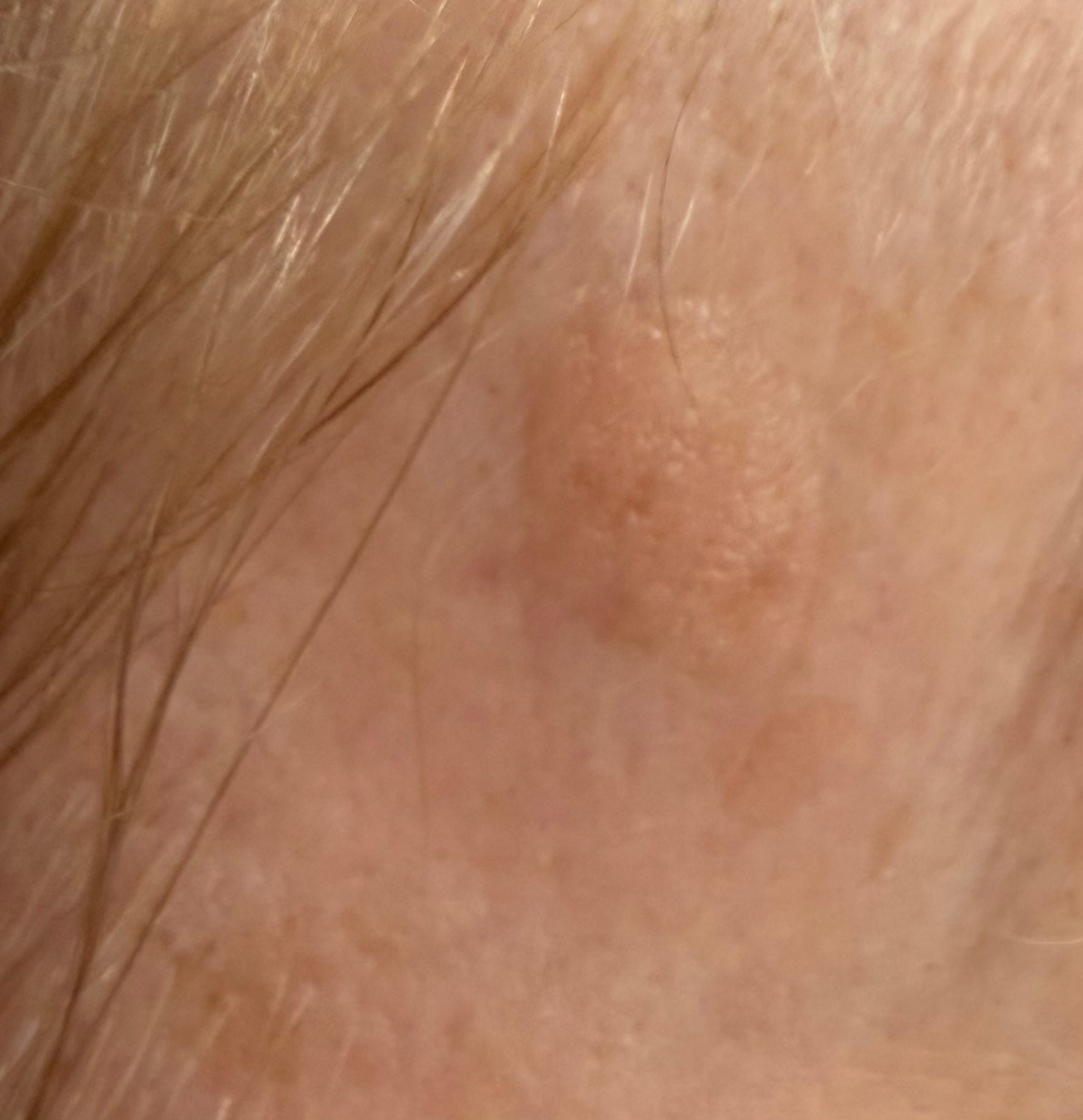
Even though I knew what the lesion was, I still had it assessed by my doctor. Skin cancers aren’t something to take lightly, and I wanted to be sure my own diagnosis was correct. Once he confirmed my suspicions, he made an immediate referral to a skin specialist for removal.
Conventional treatment options
Cryotherapy (liquid nitrogen)
Topical creams (including a Chemotherapy based one)
Photodynamic therapy (PDT)
Curettage or surgical removal
Laser therapy
I’ve had liquid nitrogen applied to some superficial basal cell carcinomas in the past, and while it is effective, last time I had liquid nitrogen applied to one at the back of my hand I ended up with a stubborn Keloid, which I resolved using Causticum.
I didn’t relish the thought of invasive surgery or liquid nitrogen on such a large lesion on my face, so I gave myself a two-week window of treating the area myself, before seeing the skin specialist for his recommendation.
